

Bidirectional EV Charging: V2H, V2G and Smart Energy
Share
Electric vehicles are transforming not only how we travel but also how we interact with energy. Thanks to bidirectional EV charging, a compatible electric vehicle can do more than receive electricity. It can potentially supply power to devices, a home or even the electricity grid.
At BlueBird Power, we believe bidirectional charging can play an important role in the transition to a more sustainable energy system.
In this article, we explain the difference between AC and DC bidirectional charging, what V2L, V2H and V2G mean, the role of ISO 15118-20 and our vision of electric vehicles as “batteries on wheels.”
What is bidirectional EV charging?
With conventional charging, electricity flows in one direction: from the electricity grid or solar panels into the vehicle’s battery.
With bidirectional charging, electricity can potentially flow in both directions. The vehicle receives energy when it needs to charge and can return some of the stored energy when required.
This creates new possible applications. Electric vehicles can move from being energy consumers to becoming flexible energy-storage and optimisation assets.
Bidirectional charging could help:
- Increase the direct use of renewable energy
- Supply electricity to compatible devices
- Power parts of a home
- Reduce consumption during expensive peak periods
- Support the electricity grid
- Provide additional energy flexibility
These applications depend on compatible vehicles, chargers, software, installation requirements and local regulations.
AC versus DC bidirectional charging
An important distinction is whether bidirectional charging takes place using alternating current or direct current.
DC bidirectional charging
An electric vehicle battery stores direct current. With DC bidirectional charging, the conversion equipment is generally located in the charging station.
The charging station converts the direct current from the vehicle battery into alternating current suitable for a home or electricity grid.
This approach gives the charging station substantial control over the power conversion. However, the required electronics can make the charger larger, more complex and more expensive.
AC bidirectional charging
With AC bidirectional charging, the bidirectional conversion equipment is generally located inside the vehicle.
The charging station can therefore remain simpler because it does not contain the primary inverter needed to convert electricity returning from the battery.
However, the electric vehicle itself must support bidirectional AC charging. The charger, vehicle and installation must also communicate correctly and comply with the relevant standards.
V2L, V2H and V2G explained
Bidirectional technology supports several different applications.
Vehicle-to-Load
Vehicle-to-Load (V2L) allows the electric vehicle to provide electricity directly to external devices.
This can be useful for camping equipment, tools, appliances or emergency power. V2L normally operates through a power outlet or adapter provided by the vehicle.
Vehicle-to-Home
Vehicle-to-Home (V2H) allows a compatible EV battery to supply electricity to a home.
For example, the vehicle could charge using solar energy during the day. Some of that stored energy could then potentially be used by the home during the evening.
V2H may also provide limited backup power during an outage, depending on the vehicle, charger, installation and supporting equipment.
Vehicle-to-Grid
Vehicle-to-Grid (V2G) allows electric vehicles to return energy to the electricity grid.
A large number of connected vehicles could potentially help balance electricity supply and demand. Possible applications include day-ahead energy optimisation, frequency services and congestion management.
At BlueBird Power, we see the long-term potential for electric vehicles to work together as a distributed energy resource.
Potential customer benefits
Bidirectional charging is not only about sustainability. It could also help households manage their electricity costs more effectively.
Smart unidirectional charging already allows drivers to charge during lower-priced periods when combined with a dynamic energy tariff.
Bidirectional charging could add further flexibility by allowing stored electricity to be used during more expensive periods. In some future arrangements, vehicle owners may also receive compensation for providing energy or flexibility to the grid.
The actual financial benefit will depend on:
- Electricity-price differences
- The vehicle’s availability and battery capacity
- Charging and conversion losses
- Battery-degradation considerations
- Energy contracts and grid-service programmes
- Applicable taxes and regulations
- The cost of compatible equipment and installation
Savings of several hundred euros may be possible in suitable circumstances. However, specific annual savings or payback periods cannot be guaranteed.
ISO 15118-20 and communication
For vehicles and charging stations to work together, they need a shared communication system.
ISO 15118-20 was published in 2022. It defines communication requirements between an electric vehicle and charging equipment, including messages and sequences that support bidirectional power transfer.
The standard covers how the vehicle and charging station exchange information relating to charging, control and energy management.
Although the standard has been published, widespread implementation still requires support from vehicle manufacturers, charging-equipment providers and other parts of the energy system.
Some manufacturers currently use proprietary solutions, but these can limit interoperability between different vehicles and chargers.
BlueSky and future bidirectional applications
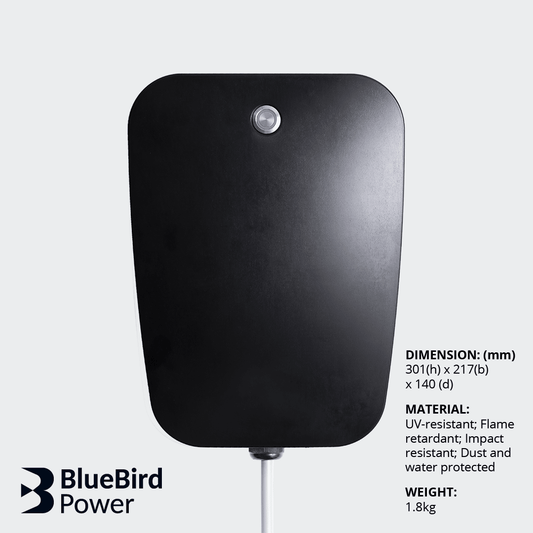
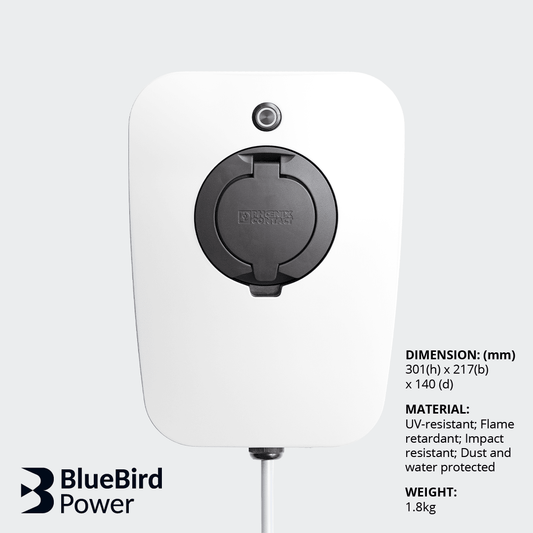
An optional version of the BlueSky home charger is available with hardware designed to support future bidirectional applications.
Hardware preparation is only one part of the complete solution. Bidirectional operation also requires:
- A compatible electric vehicle
- Suitable vehicle software
- Compatible charger software
- Support for the relevant communication standards
- An appropriate electrical installation
- Applicable grid and energy-market approval
Over-the-air software updates allow the BlueSky platform to continue developing as vehicle support and industry implementation progress.
Being bidirectional-ready does not mean that V2H or V2G is immediately available with every electric vehicle. Compatibility must be confirmed for the specific vehicle, installation and intended application.
Our vision: batteries on wheels
At BlueBird Power, we see electric vehicles as an important part of the future energy system.
Imagine a system in which:
- EVs charge when surplus solar and wind energy is available
- Smart charging reduces demand during expensive peak periods
- Compatible vehicles can supply energy to homes when appropriate
- Groups of EVs help provide flexibility to the electricity grid
- Vehicle batteries improve household energy resilience
This is our vision of “batteries on wheels,” where mobility and energy come together in a smarter and more renewable system.
The future of bidirectional EV charging
Bidirectional charging is more than a new charging feature. It represents a different way of managing and sharing energy.
V2L is already available in a growing number of vehicles. V2H and V2G require deeper integration between electric vehicles, chargers, homes, energy suppliers and electricity grids.
The future will require collaboration between vehicle manufacturers, charging-equipment developers, grid operators and energy providers. Standards such as ISO 15118-20 provide an important foundation for that cooperation.
The future is not only about charging your vehicle. It is about managing energy more intelligently.






3 comments
Weinig concrete informatie vinden over V2H-functionaliteit (Vehicle-to-Home) van de BlueSky-lader
Op de website wordt aangegeven dat de lader"bidirectional-ready" is en hardwarematig voorbereid is op bidirectioneel laden. Wat ik echter mis, is een duidelijke beschrijving van hoe deze functionaliteit binnen het BlueBird Power-ecosysteem werkt en of deze momenteel ook softwarematig wordt ondersteund.
Kunt u verduidelijken:
- Of V2H vandaag de dag daadwerkelijk actief en beschikbaar is voor gebruikers?
- Welke voertuigen momenteel officieel worden ondersteund?
- Of er specifieke firmware-, app- of energiebeheervoorwaarden nodig zijn om V2H te gebruiken?
- Wat de planning is voor softwarematige ondersteuning indien deze functionaliteit nog niet beschikbaar is?
Op dit moment lijkt de beschikbare informatie vooral te beschrijven dat de hardware voorbereid is op bidirectioneel laden, maar ik kan geen duidelijke documentatie vinden waaruit blijkt hoe V2H in de praktijk werkt binnen het BlueBird Power-platform of hoe deze functie geactiveerd kan worden.
Ik denk dat veel potentiële klanten geholpen zouden zijn met een technische uitleg of roadmap rondom de daadwerkelijke V2H-implementatie.
Uit de beschrijving wordt niet duidelijk of de Bluebird laadpaal geschikt zal zijn voor DC of AC teruglevering of voor zowel DC als AC. Tweede vraag: kunt u aangeven voor welke auto’s (merk, type) de laadpaal geschikt is om V2H of V2G te laetn functioneren?
je zou er aan toekunnen voegen —> bij een windpark opladen 0m thuis te ontladen , en het net te ontlasten