

Socket vs. Tethered Charger: Which Is Best for You?
Share
When choosing a home charging station for your electric car, you will quickly encounter an important decision: do you want a tethered model with a fixed cable or a socket model without one? In this socket vs tethered charger comparison, we outline the similarities and differences to help you decide which option best fits your situation.
Socket vs tethered charger: what they have in common
The good news is that you do not have to compromise on functionality. Both charging stations offer:
- The same charging speed: whether you choose a tethered or socket model, the charging performance is identical.
- The same quality: both models meet the same high quality standards.
- The same smart features: including dynamic load balancing, solar charging and control through the BlueBird Power app.
The technical specifications and smart charging features are therefore the same. The difference lies primarily in how you use the charger in daily life.
Socket model without a fixed cable
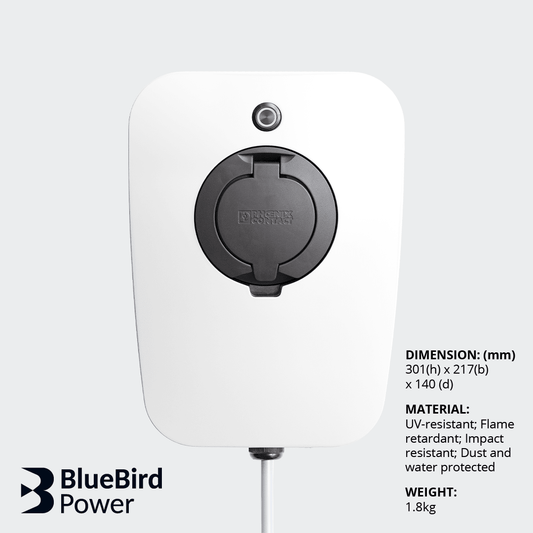
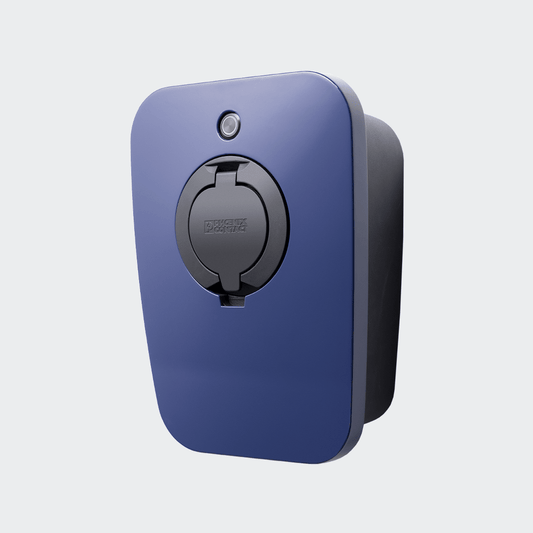
The BlueSky Socket home charger does not have a permanently attached charging cable. You connect your own cable whenever you want to charge.
Advantages
- Lower purchase price: the charging station itself is more affordable.
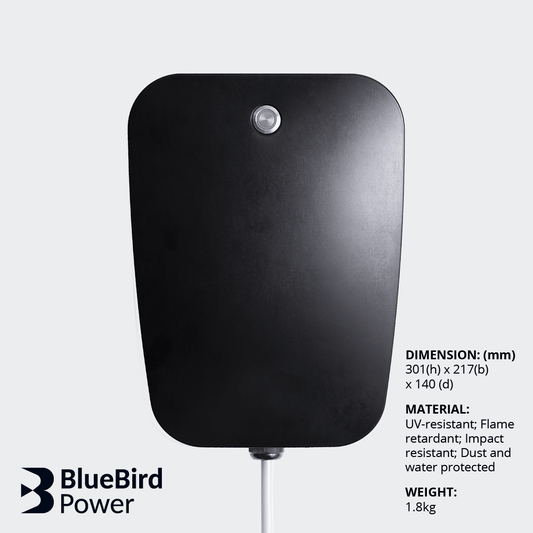
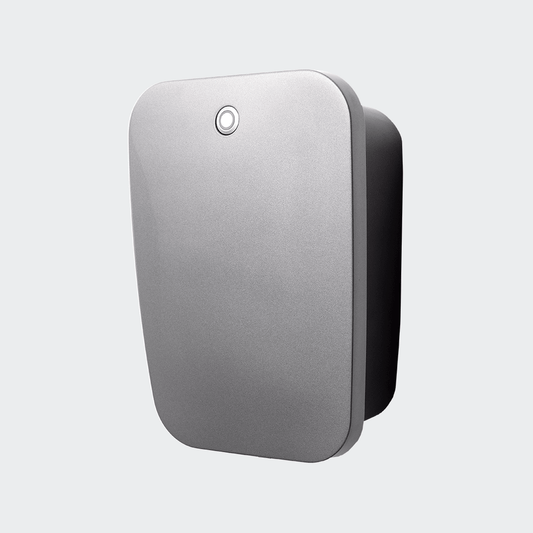
- Sleek appearance: there is no cable permanently hanging on the wall.
- Flexible use: you use your own charging cable and can remove it whenever necessary.
Points to consider
- Cable not included: you will need a separate charging cable, which is often supplied with the car.
- An extra step is required: you must take the cable out of the car and connect it for each charging session.
Tethered model with a fixed cable
The BlueSky Tethered home charger has a permanently attached cable, allowing you to plug the charger directly into your vehicle.
Advantages
- Plug-and-play convenience: the cable is always attached, allowing you to start charging immediately.
- Better overall value: the charger costs more than a socket model on its own but can be cheaper than purchasing a socket model and a separate charging cable.
- Choice of cable length: it is available with a 5-metre or 10-metre cable. The 10-metre option is especially useful if you cannot always park directly in front of your home or if you have two electric vehicles.
Points to consider
- Higher purchase price: the tethered model costs more than the socket model alone.
- The cable is always visible: however, the charger’s design allows you to wrap the cable neatly around the unit.
- A second cable may still be required: you will need a separate cable for public AC charging stations, for example when travelling.
The middle ground: a socket model with a connected cable
Some users intentionally choose a socket model but leave their charging cable connected to the station. This approach can combine elements of both options.
- The convenience of a tethered model: you do not need to remove the cable from your car for every charging session.
- The flexibility of a socket model: you can disconnect the cable when you need to use it elsewhere.
- A cleaner appearance: you can remove and store the cable whenever you prefer.
Remember that a removable cable should be stored securely when it is not being used.
Which home charger should you choose?
There is no single best choice. The right option depends entirely on your preferences, parking situation and daily routine.
Choose a socket model if:
- You value a clean and minimalist appearance.
- You already received a suitable charging cable with your vehicle.
- You appreciate being able to remove the cable.
- You want the lower initial purchase price.
Choose a tethered model if:
- You want maximum convenience and simply want to arrive, plug in and charge.
- You want to combine the charging station and cable in one package.
- You need a longer charging cable, such as the 10-metre option.
- You do not want to retrieve a separate cable for every charging session.
Consider the middle ground if:
- You want to retain flexibility but usually charge at home.
- You want the everyday convenience of a tethered model while keeping the option to remove the cable.
Both options are fully featured home charging solutions offering the same quality, charging performance and smart functionality. The final decision comes down to what you find visually appealing and what works best in your daily routine.
If you have questions about which model is best for your situation, feel free to contact BlueBird Power.





1 comment
de prijs van 569 euro zit daar ook load balancing bij