
Charging Your EV at Home: A Complete Practical Guide
Share
How to charge your electric car smartly, safely and affordably
Charging your EV at home offers maximum convenience: you can leave every morning with the battery level you need, without making a detour to a public charging station.
In this guide, we explain how home charging works, what choices you need to make and how you can save money with dynamic energy tariffs and solar power. We also explain when public charging stations remain useful.
We focus on what matters in practice so that you can set up home charging correctly from day one.
Why charging your EV at home is so popular
Home charging offers control, comfort and often lower charging costs. Your car can charge at the time that suits you: overnight, during the day using solar energy or automatically during the cheapest hourly rates.
With the BlueBird Power app, you can set departure times, charging limits and other preferences. The charger then plans the charging session around your requirements.
Home charging is particularly attractive if you have solar panels or use a dynamic electricity tariff. Under the right circumstances, charging at home can be less expensive than relying primarily on public charging stations.
What do you need to charge an EV at home?
To charge an electric car at home, you generally need:
- A suitable wall-mounted or pole-mounted charging point
- An appropriate single-phase or three-phase electrical connection
- Sufficient charging capacity for your vehicle and household connection
- Dynamic load balancing to help prevent overloading the household installation
- A smart app for managing schedules, charging limits and costs
- Optionally, integration with solar panels and a dynamic energy tariff
Because BlueBird Power develops the hardware and software as one integrated ecosystem, the different components work together—from the charging station on your wall to the app in your hand.
This integration provides a stable charging experience and enables software updates. The platform is also being prepared for next-generation functionality such as bidirectional charging, subject to compatible vehicles, standards and supporting infrastructure.
Single-phase or three-phase charging
The appropriate connection depends on your home, vehicle and charging requirements.
Single-phase charging: suitable if you drive fewer kilometres or have plenty of time to recharge, particularly overnight.
Three-phase charging: supports a higher charging capacity and can recharge a compatible EV more quickly. This is useful if you drive frequently or regularly need to restore a substantial amount of range.
The charging speed is also limited by the maximum AC charging capacity supported by your vehicle. A three-phase charger will therefore not necessarily charge every vehicle faster.
Whichever connection you use, dynamic load balancing helps make efficient use of the available household capacity.
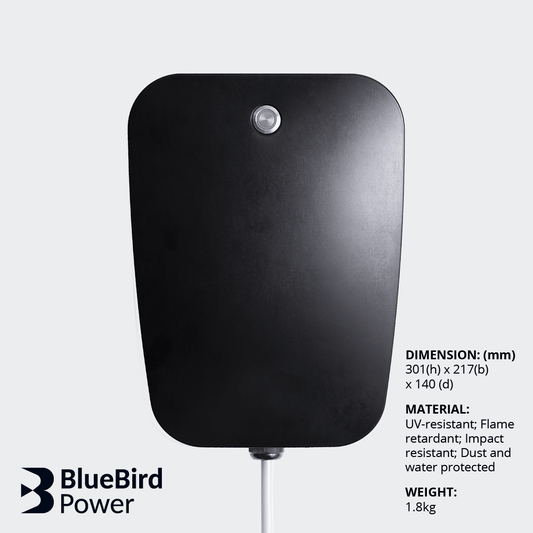
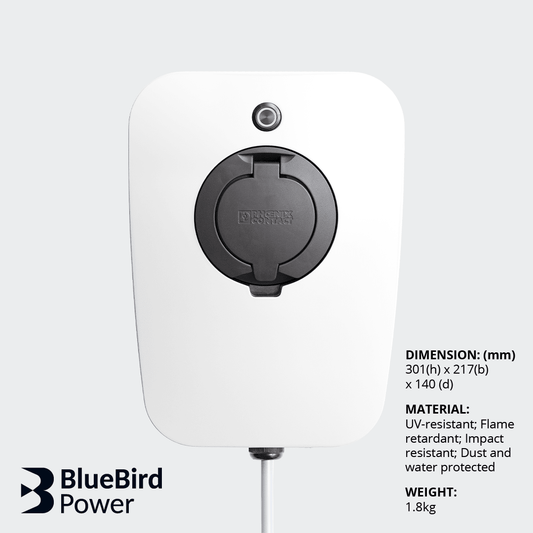
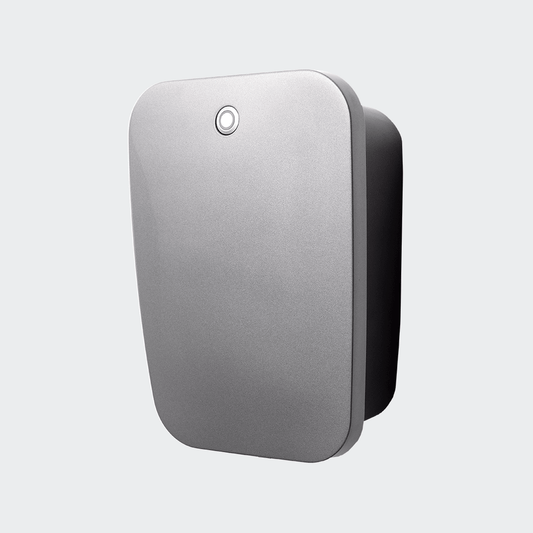
If you switch on an appliance such as an induction hob or heat pump, the BlueSky home charger can temporarily reduce its charging power. When household capacity becomes available again, it can increase the charging speed automatically.
This helps keep charging safe and efficient while reducing the likelihood that you will need to upgrade your grid connection solely for the charger.
Household socket versus a dedicated home charger
You can charge an electric car from an appropriate household socket, but this is generally not the best solution for frequent daily charging.
A standard Dutch household socket supplies approximately 230 V. Charging through it is relatively slow and places a continuous load on the circuit. The installation and socket must be suitable for that sustained load and should be assessed if there is any uncertainty.
Household-socket charging also lacks functionality such as dynamic load balancing, detailed energy measurement and automated scheduling.
A dedicated home charger is designed for extended EV charging sessions. It offers faster and more stable charging, appropriate protection and integration with smart energy-management features.
The charger can also communicate with the smart meter and app, allowing charging to take place automatically at suitable times.
Saving with dynamic tariffs and solar energy
With a dynamic energy tariff, the electricity rate changes throughout the day—hourly or, depending on the contract and market arrangements, in shorter intervals.
The app can schedule charging when electricity prices are lower while still making sure the vehicle reaches the required charge level before your chosen departure time.
If you have solar panels, you can configure the charger to prioritise your own surplus solar energy. With True Solar, the system measures household consumption and solar production in real time. It then adjusts the charging power to follow the available solar surplus.
This allows more of the electricity generated by your solar panels to go directly into your vehicle instead of being exported to the grid.
Read our complete guide to charging your EV with your own solar panels.
When are public charging stations useful?
Public charging stations and rapid chargers remain valuable even if you have a home charger.
They provide a practical solution when travelling, when you cannot charge at home or when you unexpectedly need to recharge quickly. Destination chargers are also useful when your vehicle will remain parked away from home for an extended period.
For most everyday journeys, home charging remains one of the most convenient options. Public and rapid chargers complement it when you are travelling or need additional range.
Expertise you can rely on
At BlueBird Power, we design, test and manage the complete charging ecosystem. This includes the hardware, embedded software, cloud services and mobile app.
Managing the complete system enables close integration and efficient software updates. It also allows us to develop solutions based on how chargers are used in real homes.
With this experience, we help you charge your electric car at home safely, flexibly and intelligently without adding unnecessary complexity.